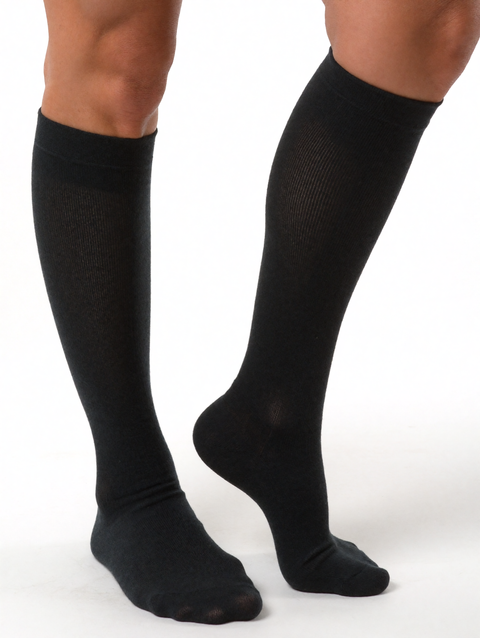


Marathon Running with Factor V Leiden: Life-Saving Power of Compression Socks
Share
For runners carrying genetic blood clotting disorders, deciding to continue marathon running balances passion for sport against potentially life-threatening health risks.
A remarkable case study demonstrates how compression running socks provided critical protection for a female marathoner with Factor V Leiden - a genetic condition that dramatically increases risk for blood clots during intense physical activity.
This research offers hope and practical guidelines for runners with hereditary clotting disorders, showing that with appropriate precautionary measures, even high-risk athletes can safely pursue their endurance goals.
Understanding Factor V Leiden
What is Factor V Leiden?
Factor V Leiden is the most common hereditary blood clotting disorder:
- Affects approximately 5% of the population
- Involves a genetic mutation
- Makes blood more prone to forming dangerous clots
Where clots typically form:
- Deep leg veins (deep vein thrombosis)
- Lungs (pulmonary embolism)
For people with Factor V Leiden:
❌ Normal clot-dissolving mechanisms work less effectively ❌ Blood has increased tendency to form clots during:
- Periods of stress
- Dehydration
- Prolonged immobility
❌ Risk for dangerous clots increases during situations that typically activate the blood clotting system
Why marathon running is especially risky:
⚠️ Marathon running presents multiple triggers:
- Intense physical stress
- Dehydration
- Inflammatory responses
- Potential travel-related immobility
⚠️ The combination:
- Genetic predisposition
- Marathon stress
- Creates a potentially dangerous scenario
- Where compression intervention benefits become critically important
Case Study: Two Marathons, Two Outcomes
This unique research followed a female endurance athlete with confirmed Factor V Leiden through two separate marathon competitions:
✨ Creating a rare opportunity ✨ For direct comparison of compression sock effects ✨ In a high-risk individual
MARATHON 1 - WITHOUT COMPRESSION SOCKS:
❌ The runner completed her first marathon ❌ Wearing regular running socks ❌ Providing baseline measurements ❌ Of how her blood clotting systems responded to marathon stress ❌ Without any protective intervention
MARATHON 2 - WITH COMPRESSION SOCKS:
✅ For her second marathon ✅ The same runner wore compression socks ✅ Throughout the entire race ✅ Enabling researchers to measure the protective effects of compression ✅ In this genetically high-risk individual
MEASUREMENT PROTOCOL:
📊 Blood samples collected at 3 critical time points for each marathon:
- 24 hours before the race
- Immediately after completion
- 24 hours after the race
📊 Providing complete picture of blood chemistry changes
Dramatic Protective Effects
Results revealed significant protective benefits that compression socks can provide for runners with genetic clotting disorders:
1. TISSUE PLASMINOGEN ACTIVATOR (t-PA) REDUCTION:
✅ When wearing compression socks ✅ The runner showed 56% reduction in t-PA levels ✅ Compared to running without compression
💡 What this means:
- Lower t-PA indicates less extreme activation of clot-breakdown systems
- Shows more balanced blood chemistry
2. THROMBIN-ANTITHROMBIN COMPLEX (TAT) REDUCTION:
✅ Compression socks resulted in 63% reduction in TAT levels ✅ Showing significantly less active clot formation ✅ During and after the marathon
💡 What this means:
- TAT is a marker of active clot formation
- 63% reduction is dramatic protection
3. D-DIMER REDUCTION:
✅ The runner experienced 30% reduction in D-Dimer levels ✅ With compression socks
💡 What this means:
- Shows less overall stress on clot formation and breakdown systems
- D-Dimer is a marker of both processes
CLINICAL SIGNIFICANCE:
🎯 These reductions represent clinically significant changes in blood chemistry 🎯 That can substantially reduce risk of dangerous clot formation 🎯 In genetically predisposed athletes
Science Behind Protection
The protective mechanisms of compression socks appear especially relevant for runners with Factor V Leiden:
1. ENHANCED VENOUS RETURN:
✅ Improved blood flow prevents stagnation ✅ Which can trigger clot formation in people with genetic clotting disorders ✅ For Factor V Leiden carriers, maintaining active circulation becomes especially critical
2. REDUCED ENDOTHELIAL STRESS:
✅ Better circulation can reduce stress on blood vessel walls ✅ Decreases release of clotting factors ✅ That can overwhelm already compromised clot regulation systems in genetic carriers
3. IMPROVED HYDRATION STATUS:
✅ By reducing fluid pooling in legs ✅ Medical compression socks can help maintain better overall hydration status ✅ Reduces blood concentration that contributes to clot risk
4. MODERATED INFLAMMATORY RESPONSE:
✅ Decreased inflammatory activation associated with compression use ✅ Can help prevent the cascade of events ✅ That can lead to dangerous clot formation in susceptible individuals
Implications for High-Risk Runners
This case study has profound implications for runners with known or suspected genetic clotting disorders:
1. RISK ASSESSMENT:
⚠️ Runners with family histories of:
- Blood clots
- Unexplained clotting events
- Diagnosed genetic disorders
⚠️ Should undergo appropriate medical evaluation
- Before pursuing marathon training
2. PROTECTIVE STRATEGIES:
✅ For runners cleared for endurance activities despite genetic risk factors ✅ Compression socks can provide essential protection ✅ During training and competition
3. MEDICAL SUPERVISION:
⚠️ High-risk runners should maintain:
- Close medical supervision
- May benefit from additional protective measures beyond compression socks:
- Tailored hydration strategies
- Anticoagulant medications when appropriate
4. INDIVIDUAL MONITORING:
⚠️ Each person with genetic clotting disorders ⚠️ May respond differently ⚠️ Makes personalized medical monitoring essential ⚠️ For safe participation in endurance sports
Practical Guidelines for High-Risk Runners
Based on this research, runners with Factor V Leiden or other genetic clotting disorders may consider:
1. PRE-PARTICIPATION MEDICAL CLEARANCE:
✅ Comprehensive evaluation by specialists ✅ Familiar with both genetic clotting disorders ✅ And exercise physiology ✅ Before beginning marathon training
2. COMPRESSION SOCK PROTOCOL:
✅ Wearing properly fitted compression socks ✅ During all long training runs ✅ During races ✅ Not just as an occasional intervention
3. ENHANCED HYDRATION STRATEGIES:
✅ Maintaining optimal hydration status ✅ Becomes even more critical ✅ For runners with genetic clotting predispositions
4. TRAVEL CONSIDERATIONS:
✅ Additional precautions during travel to races ✅ Including compression socks during flights ✅ Avoiding prolonged immobility
5. RECOGNIZING WARNING SIGNS:
✅ Understanding symptoms of blood clots ✅ Having clear protocols ✅ For seeking immediate medical attention ✅ If warning signs develop
Broader Context of Genetic Risk and Exercise
This case study highlights the complex relationship between:
- Genetic predisposition
- Exercise benefits
Complexity:
⚖️ While marathon running provides significant health benefits for most people ⚖️ Individuals with genetic clotting disorders face unique challenges ⚖️ That require specialized approaches
This research demonstrates:
✅ That with appropriate precautionary measures ✅ Including strategic use of compression socks ✅ Even genetically high-risk individuals can ✅ Safely pursue endurance activities
HOWEVER, this requires:
📋 Informed decision-making:
- Understanding both risks
- And potential protective strategies
- Available for high-risk athletes
📋 Medical partnership:
- Ongoing collaboration with healthcare providers
- Who understand both the genetic condition
- And demands of endurance sports
📋 Personalized approach:
- Recognizing that strategies effective for typical runners
- May need modification
- For those with genetic risk factors
Hope for High-Risk Athletes
This research provides encouraging evidence that:
💪 Genetic predisposition to blood clots 💪 Does NOT necessarily exclude marathon participation
WITH APPROPRIATE:
✅ Medical supervision ✅ Protective strategies like compression sock use ✅ Careful monitoring
✅ Some high-risk athletes can safely pursue their endurance goals
IMPORTANCE OF COMPRESSION SOCKS:
💡 The dramatic protective effects observed in this case study 💡 Show that compression socks represent more than just a performance aid 💡 For genetically high-risk runners 💡 They can be essential safety equipment 💡 That enables safe participation in the sport they love
For Which Runners Is This Research Most Important:
⚠️ Runners with Factor V Leiden ⚠️ Runners with other genetic clotting disorders ⚠️ Family histories of blood clots ⚠️ Unexplained clotting events in the past ⚠️ Any high-risk athletes ⚠️ Marathon runners with genetic risk factors
Summary of Key Points:
CASE STUDY:
- 1 female marathoner with Factor V Leiden
- 2 marathons - one without, one with compression
- 3 time point measurements (24h before, immediately after, 24h after)
DRAMATIC PROTECTIVE EFFECTS:
✅ 56% reduction in t-PA (less extreme clot-breakdown activation) ✅ 63% reduction in TAT (less active clot formation) ✅ 30% reduction in D-Dimer (less overall system stress)
PROTECTION MECHANISMS:
✅ Enhanced venous return ✅ Reduced endothelial stress ✅ Improved hydration status ✅ Moderated inflammatory response
PRACTICAL GUIDELINES:
✅ Pre-participation medical clearance ✅ Wearing compression socks during all training runs and races ✅ Enhanced hydration strategies ✅ Additional travel precautions ✅ Knowing warning signs
About the research:
This case study was conducted by Zaleski, Pescatello, Thompson, and Taylor to analyze the effect of compression socks on hemostatic activation after marathon running in a female endurance athlete with Factor V Leiden, a genetic predisposition to blood clotting disorders.